

Why Does Your Floor Turn Dark and Yellow?
Learn why parquet floors change color over time and whether they can be restored or need replacing.
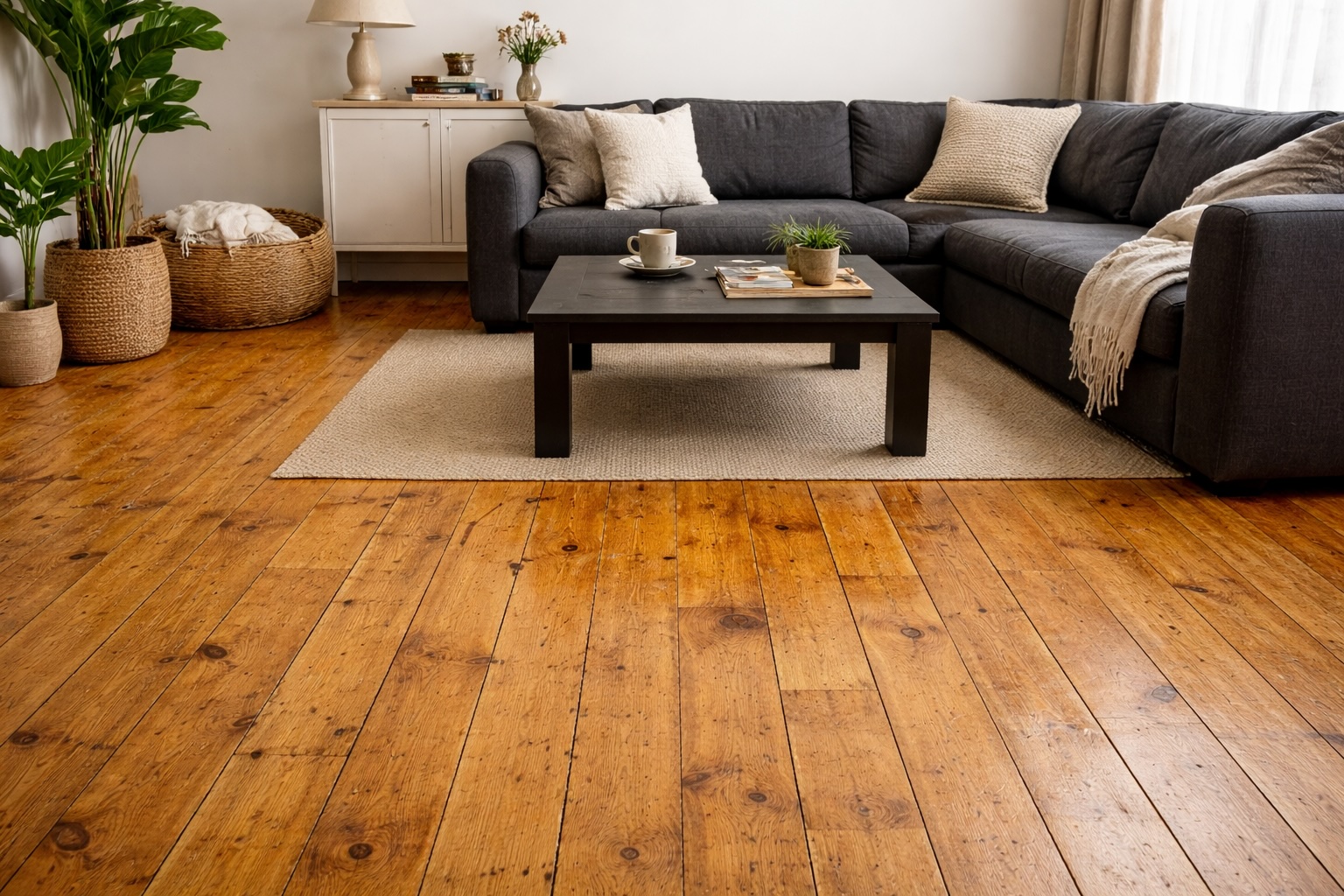
Do you remember the moment when your parquet floor was newly installed or freshly refinished? It looked bright, clean, in a natural wood tone, and the whole room felt lighter and more spacious. Then five or ten years pass and you suddenly notice the floor is no longer the same. It has taken on a yellowish, sometimes even orangish tint, and in some areas it may look darker than it did at the beginning. Naturally, the questions appear: what happened, is the floor damaged, can it be brought back, and do you really need to replace the entire floor?
The good news is that in most cases the floor is not damaged and you do not need to replace it. What you are seeing is a normal aging process with a clear cause and a practical fix.
To understand why the color changes, it helps to remember that parquet and plank floors are usually not bare wood. The surface is protected by a finish layer, most commonly polyurethane lacquer or oil. This layer shields the wood from moisture, dirt, and wear. At the same time, the finish is often the part that changes color over time.
This is especially common with older solvent based lacquers. As they age, and as they are exposed to light, heat, and oxygen, the lacquer components oxidize. In simple terms, the finish changes color. Most often it shifts toward yellow or orange tones. This does not mean the lacquer was low quality. It is a chemical process that happens in many materials, similar to how white plastic tends to yellow over time.
Why does it happen faster in some places?
Sunlight is usually the main reason. Areas near windows that receive direct sun tend to change color faster. Under rugs and furniture the floor often stays lighter because the finish has been less exposed to light. That is why when you move furniture or remove a rug, you may see clear differences. Heat also speeds up the process. If you have underfloor heating or the room gets very warm in summer, oxidation typically happens faster.
Is this a bad thing?
Usually not. It is an aesthetic change, not a structural one. The wood under the finish is typically sound, and the finish still protects it. However, visually it can be annoying, especially if you prefer a bright natural wood look. Darker floors can make a space feel smaller and heavier, which is why many owners choose to refinish once they notice the change.
Can you stop it completely?
Not fully, but you can slow it down a lot. Modern water based lacquers usually yellow much less than older solvent based ones. Oil and wax systems often keep the tone more stable as well. If you are planning a new floor or a refinishing project, water based lacquer is often a good choice because it stays clearer longer. If your floor already has an older lacquer, the simplest everyday step is to reduce direct sun exposure with blinds or curtains, especially during bright summer hours.
Should you replace the floor or can you refinish it?
In most cases refinishing is enough. During refinishing, the old lacquer layer is sanded off completely, exposing clean wood. Then the floor is cleaned, sometimes primed, and a new lacquer or oil system is applied. The yellow or orange tint disappears because it was in the old finish, not in the wood itself. If you choose a modern water based lacquer, the new finish will stay clear and natural looking for longer.
Full replacement is usually only necessary if the problem is not the color but the structure: rot, severe warping, major cracks that continue to open, or subfloor issues that cause movement. If the only issue is yellowing and darkening of the finish, refinishing is almost always the faster and more cost effective solution.
How long will the floor stay lighter after refinishing?
It depends on the finish and the room conditions. With water based lacquer many floors keep a lighter tone for around 10 to 15 years before noticeable yellowing returns. With oil or wax, the color can remain even more stable, but those systems usually require more regular maintenance. Solvent based lacquers tend to show yellowing sooner, often after 7 to 10 years, especially in sunny rooms.
What should you do in practice?
If the floor has clearly yellowed or darkened and it bothers you, refinishing with sanding and a new finish is the most reliable way to bring back the lighter look. Before you start, discuss finish options with a professional. If your priority is a bright and natural tone, choose a water based lacquer or oil. If maximum wear resistance matters most and you do not mind some color shift over time, solvent based lacquer can still be an option. And regardless of the finish, if you want to slow future yellowing, reduce direct sunlight with curtains or blinds.
Yellowing and darkening are normal processes for many lacquered wooden floors. They are most often caused by finish aging, not by damage to the wood. That is why the issue can usually be fully solved by refinishing rather than replacing the whole floor. If you want the original light tone back, quality sanding and a new finish will do it. With the right finish choice, you can also extend the period during which your floor stays fresh, bright, and natural.