

Which Floor to Choose for Your Apartment?
Choose the perfect flooring for your apartment. Practical advice on parquet, laminate and vinyl selection.
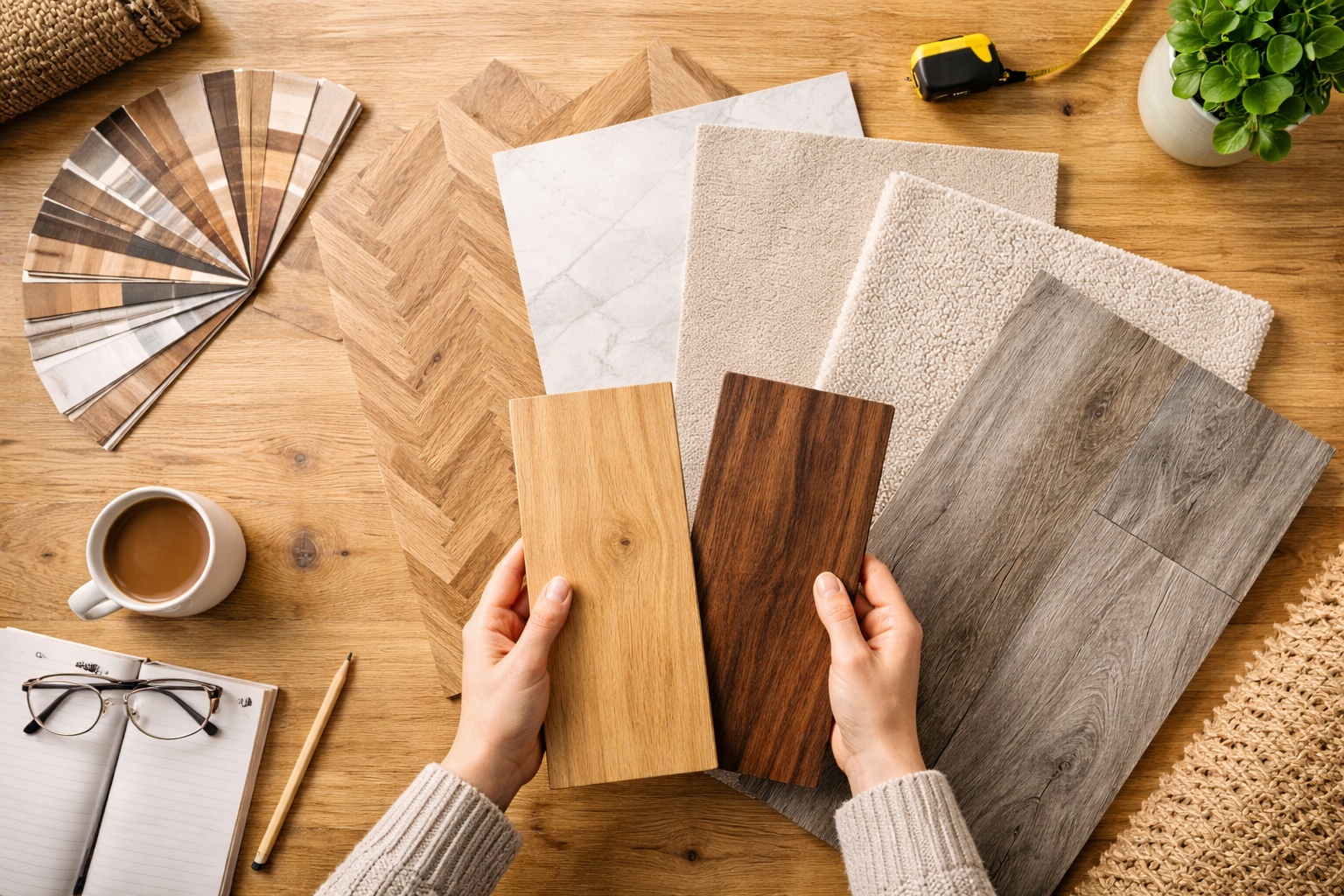
Standing in your new or renovated apartment and looking at bare floors, you have to make one of the most important decisions: what type of flooring should you choose? This decision affects not only how the space looks, but also daily comfort, maintenance effort, and your budget for the next 10 to 20 years. There is a lot of information online, but it is often either too technical or too simplified. This guide is the practical middle ground, based on real world experience: what truly matters in everyday life, not just in specification tables.
Before comparing specific flooring types, it helps to accept one key point: there is no single "best" floor for everyone. Each option has strengths and weaknesses. The right choice depends on your priorities.
The first factor is lifestyle. Do you have children or pets? How intensively will the rooms be used? Do you like walking barefoot? These details might seem small, but they strongly influence which floor will feel comfortable, durable, and stress free.
The second factor is budget. Solid wood parquet generally costs more than laminate, but it can last far longer and can be refinished. You should evaluate not only the upfront price, but also the long term value.
The third factor is aesthetics. Do you want a natural wood look with grain and color variation, or a more uniform, modern appearance? Does the floor color need to match your furniture and wall tones? Mistakes here are expensive, because flooring is not something you replace every couple of years.
And finally, practicality. Are you willing to invest time in regular care, or do you want something that requires minimal attention and forgives daily life?
Solid wood parquet and plank floors
Solid wood flooring is a classic that has proven itself for decades. It is made from a single piece of wood, typically about 15 to 22 millimeters thick. The biggest advantage is longevity and the ability to refinish. If the surface gets scratched, loses its shine, or you simply want a new look, it can be sanded and finished again. A well maintained solid wood floor can last 50 to 100 years.
Solid wood is also unique. Every board has its own grain and tone, which means the floor will never look mass produced. You can choose wide planks, herringbone patterns, and many other designs.
The downsides are real too. Solid wood is sensitive to humidity changes. If indoor climate swings, wood expands and shrinks, and small gaps may appear. This is normal, but it is something you need to accept. Solid wood also needs more careful treatment around moisture. The cost is higher: quality oak parquet installed often ranges roughly from 50 to 120 EUR per square meter. But it is a long term investment.
Engineered parquet
If you want the look of wood but prefer more stability and often a more moderate price, engineered parquet is a great compromise. It is usually built in layers: a real wood top layer, a stabilizing middle layer, and a support layer. This structure makes it more stable than solid wood, less reactive to humidity changes, and often more suitable for underfloor heating.
Visually, engineered parquet looks like solid wood because the top layer is real wood. Most people will not notice the difference. The main limitation is refinishing: depending on the thickness of the top layer, it can typically be sanded about 1 to 3 times. That is still far better than floors that cannot be refinished at all. The price often ranges roughly from 35 to 80 EUR per square meter installed.
Laminate
Laminate is one of the most popular apartment solutions because it delivers a good looking result at a reasonable price. It is not real wood. The top layer is a printed decorative layer protected by a durable wear layer. Modern laminate can look surprisingly realistic, and many products also have embossed textures that imitate wood grain.
Laminate's big advantage is practicality. It is generally resistant to scratches and everyday wear and easy to clean. It is convenient if you have children or pets and want a low stress floor. The key downside is that laminate cannot be refinished. If the surface is badly damaged, you replace individual boards or the entire floor. Typical lifespan is about 10 to 20 years depending on quality and use. Price often ranges around 15 to 40 EUR per square meter installed.
Vinyl flooring
Vinyl floors have become very popular because they combine multiple benefits. Vinyl is typically PVC with a wood or stone look and a protective top layer. The biggest advantage is water resistance. Vinyl is suitable for kitchens, hallways, and other areas where moisture risk is higher. It often feels warmer underfoot than laminate and is usually quieter.
Vinyl is more flexible, so it can absorb impacts better. Many products use a click system, which makes installation relatively fast. The downside is similar to laminate: vinyl usually cannot be sanded and refinished. When it wears out, it is replaced. Lifespan is often around 10 to 25 years depending on quality. Price often ranges about 20 to 50 EUR per square meter installed.
Which option for which needs?
If you have children or pets and you want durability and easy cleaning, laminate or vinyl is typically the practical choice. Vinyl is especially good if moisture is a concern and you want peace of mind around water.
If this apartment is a long term home and you want to invest in quality, solid wood or engineered parquet often makes sense. It costs more upfront, but the ability to refinish means you may not need a full replacement later.
If you want the wood look but also want stability and often underfloor heating compatibility, engineered parquet is a strong choice.
If your budget is limited but you still want a clean modern result, a good quality laminate is a reasonable compromise. It can serve well for 10 to 15 years, which is enough for many people.
Conclusion
The right flooring choice is always a balance between budget, durability, aesthetics, and lifespan. There is no universal best floor, only the best solution for your home and your lifestyle. If you are unsure, it is worth speaking with a specialist who can assess the room conditions, the subfloor, the moisture level, and your daily needs. Flooring is an investment for years, so it is better to spend extra time choosing now than to regret it later.