

Underfloor Heating and Parquet - Everything You Need to Know
Detailed information on installing glued parquet over underfloor heating systems.
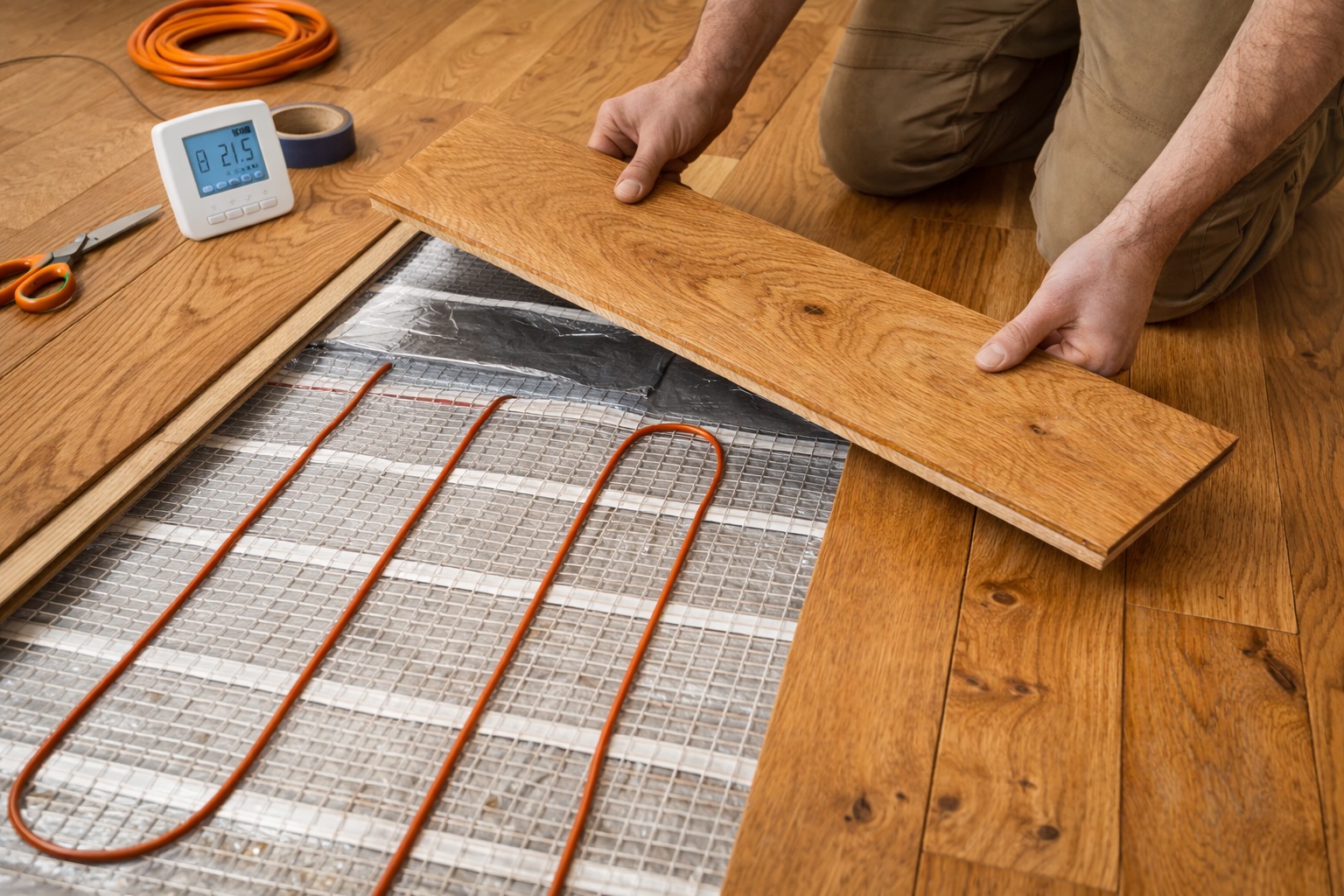
Underfloor heating is a level of comfort that anyone who has experienced it does not want to give up. But if you also love the natural look of wooden parquet, a practical question appears: are these two things compatible? Can you install parquet over an underfloor heating system? And if you can, what conditions must you follow so it works correctly and lasts for years?
The answer is yes, you can, but not with every type of parquet and not in every installation method. In this guide we will cover the key points of installing a wooden floor over underfloor heating. The goal is to keep it simple, but precise: no unnecessary jargon, but all the important technical details you need to make the right decision.
Why not every parquet floor works with underfloor heating
First, it helps to understand what heat does to wood. Wood is a natural material that reacts to changes in temperature and humidity. When the floor is heated from below, wood tends to shrink slightly. When heating is reduced and the floor cools down, wood expands again. This is normal and is often described as wood "moving".
Problems start when the wood is installed in a way that does not allow it to react evenly, or when movement becomes uncontrolled. For example, if boards are installed in a way that creates gaps, air pockets, or uneven contact with the subfloor, heat transfer becomes uneven and stresses increase. Over time this can lead to gaps, cracks, cupping, or warping.
That is why a floating installation is usually not the best option for parquet over underfloor heating. For most reliable results, the floor should be fully bonded to the subfloor.
Why fully glued parquet is the safest approach
Fully glued parquet means each board or parquet element is bonded to the subfloor across its full surface with a suitable elastic adhesive. This approach matters for three reasons.
First, heat transfer is more efficient and even. Without air pockets under the boards, heat passes through the floor consistently.
Second, the right elastic adhesive helps manage wood movement. The wood still expands and shrinks, but the adhesive absorbs part of the stress and reduces the risk of cracks or deformation.
Third, a glued floor feels more solid. It is usually quieter, less hollow sounding, and less prone to movement or creaking.
Solid wood vs engineered parquet with underfloor heating
Technically, solid wood can be installed over underfloor heating, but it comes with more limitations and risk. Solid boards are usually 15 to 22 millimeters thick. The thicker the wood, the more it reacts to temperature changes. That increases the chance of gaps and warping, even with a good adhesive, especially if indoor humidity is not controlled.
Engineered parquet is generally the better choice. It has a layered structure: a real wood top layer, and stabilizing layers below. The top layer is usually around 3 to 6 millimeters thick, so movement is smaller. The cross layered construction improves stability and reduces deformation risk. This is why most manufacturers recommend engineered parquet for underfloor heating.
What thickness should you choose?
Thickness matters for two reasons: heat efficiency and stability. The thicker the floor, the harder it is for heat to pass through, and the more likely the wood is to react.
For underfloor heating, an overall thickness of about 10 to 15 millimeters is often considered optimal. Engineered parquet in the 10 to 14 millimeter range with a 3 to 4 millimeter wear layer is a very common and practical solution. It transfers heat well and still allows at least one sanding and refinish in many cases.
If you choose solid wood, many installers recommend staying at or below about 15 millimeters. Thicker solid boards increase risk and reduce heating efficiency.
Which underfloor heating system is suitable?
There are two main systems: water based and electric. Both can work with parquet if designed and controlled properly.
Water based underfloor heating usually provides smoother, more even heat. It changes temperature gradually, which is gentler on wood. Surface temperature is typically controlled and kept within safe limits.
Electric systems vary. Cable systems can be similar to water systems when installed correctly. Film systems require more caution because they can create uneven or localized heating if the installation is not perfect.
The core rule is the same: the floor surface temperature should not exceed about 27 degrees Celsius. Higher temperatures can damage wood, adhesive, and finishes.
Correct installation: key steps and conditions
Most problems come from poor installation. With underfloor heating, parquet needs a disciplined approach.
The subfloor must be dry, flat, and stable. If you have a concrete screed, it needs enough time to fully cure and dry, and its moisture level must be within the allowed limit. If the screed is still damp, moisture can migrate into the wood later and cause damage.
Before installing the parquet, the heating system should be tested and run to confirm it works evenly. This is usually done for several days, gradually increasing to operating temperature. After testing, the system is typically turned down or off before installation, according to the adhesive and manufacturer requirements.
The adhesive must be an elastic, heat resistant parquet adhesive approved for underfloor heating. This is not the place to experiment. The parquet must be bonded fully, with no voids or air pockets.
After installation, the adhesive needs full curing time. Often this means waiting around 7 days before turning the heating back on, but the exact timing depends on the adhesive product and site conditions.
How to start and use underfloor heating after installation
The first start up should be gradual. Begin at a lower temperature and increase by a couple of degrees per day until you reach normal operation. This helps the wood adapt without stress.
In daily use, keep the floor surface temperature roughly between 20 and 27 degrees Celsius and avoid exceeding the maximum. Often 23 to 25 degrees is enough for comfort.
If you want to increase heat in winter, do it gradually. The same applies in spring when you reduce or turn off heating: avoid sudden changes.
Humidity control is critical
Humidity is one of the biggest enemies of wood floors, especially above underfloor heating. Heating dries the air, which can cause the wood to lose moisture and shrink, leading to gaps.
A stable indoor relative humidity of about 40 to 60 percent is commonly recommended. In winter, you may need a humidifier. If humidity drops below about 30 percent, the risk of noticeable gaps increases. In summer, be careful that humidity does not stay too high for long periods. If it rises above about 70 percent, the wood can absorb moisture and expand, increasing stress and the risk of deformation.
A simple hygrometer is a smart investment. It helps you monitor conditions and react early.
Caring for parquet over underfloor heating
Care is similar to other wooden floors, with a few important habits. Clean with a slightly damp cloth, not a wet one. Avoid standing water. Spills should be wiped immediately.
If the floor is lacquered, the finish may need maintenance over time depending on wear. If it is oiled, maintenance is usually more regular, but it can be simpler to do and often does not require full sanding.
Does underfloor heating reduce the lifespan of parquet?
If you choose the right parquet, install it correctly, and control temperature and humidity, lifespan does not have to be shorter. Quality engineered parquet installed with correct adhesive and proper care can last for decades over underfloor heating and can often be refinished one or two times. Issues typically appear when rules are ignored: wrong parquet type, wrong adhesive, subfloor too damp, temperature too high, or humidity too low in winter.
Conclusion
Underfloor heating and parquet are compatible with the right approach. The key is fully glued engineered parquet, correct installation, controlled temperature, and stable indoor humidity. Avoid floating parquet over underfloor heating and consider solid wood only with stricter limitations. If you are planning this type of floor, consult a professional who understands underfloor heating requirements. Done correctly, you can enjoy warm floors and the natural beauty of wood for many years.