

Renovate or Replace Your Floor? A Practical Guide
Find out when to renovate and when to replace your floor. A practical guide to help you make the right decision.
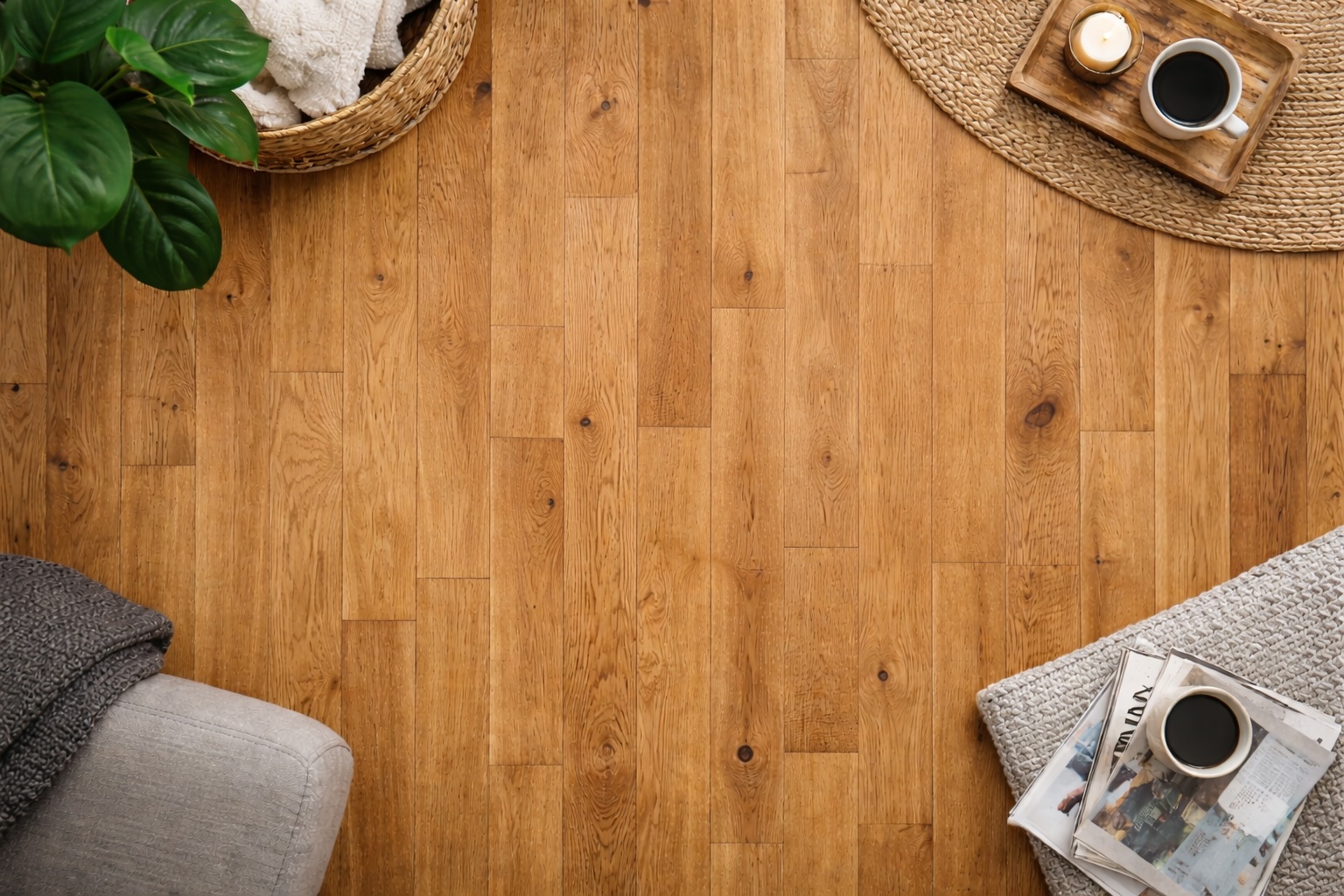
If you are standing on a worn parquet floor in your apartment, you have probably asked the same question hundreds of owners ask every year: can this floor still be saved, or is it time to invest in a new one? It sounds like there should be a simple answer, but in reality the choice between restoring and replacing depends on several factors and is different for every situation.
Good that you are here. After reading this article, you will clearly understand when parquet or a wooden floor can and should be restored, and when it is smarter to invest in a new surface. We will keep it simple and real, no marketing talk, just facts and practical experience.
When can a floor be restored? What determines whether it is possible?
The first thing to understand is that not every floor can be restored. That is not pessimism, it is reality. For parquet or solid wood boards, the main factor that determines whether restoration is possible is one thing: how much usable wood thickness is still left.
With traditional parquet or solid boards, the material is typically about 15 to 22 millimeters thick. When sanding a floor, roughly 0.5 to 1 millimeter is removed in one full restoration cycle. Simple math: if your parquet has already been sanded 8 to 10 times, the chance that there is enough thickness left is very small. In most homes, however, floors are restored about 2 to 4 times over their lifetime, so there is usually still a reserve.
How do you check whether there is enough thickness? The simplest way is to look at the edges near the walls or at door trims. If you can see at least 3 to 4 millimeters of wood above the tongue and groove area, restoration is likely possible. If the top layer is very thin and already close to the joint profile, then unfortunately the floor is near the end of its usable life.
When is restoration the best choice?
There are situations where restoring a floor is not only possible but also the most sensible and cost effective option.
If your parquet is scratched from daily use, has small dents from dropped objects, or has simply lost its shine and looks tired, restoration is ideal. In these cases the problem is only on the surface. The wood itself is fine, the finish layer has simply reached the end of its service life.
If the floor has darkened or become lighter in areas, for example where a rug or furniture stood, restoration will even it out. The same applies when the finish is worn in spots but the wood is still in good condition. Sanding and applying a new lacquer or oil finish can bring the floor back to life.
Also important is the floor's structure. If the boards are firmly fixed, do not creak, are not split along the grain, and there are no serious gaps between boards, the structure is sound and restoration usually delivers an excellent result. After high quality sanding and a new lacquer or oil system, the floor can look very close to how it looked when it was installed. Many people even say it looks better because wood gains character and depth over time.
When does the floor need to be replaced?
Sometimes the honest answer is that restoration is no longer reasonable and replacement is the right solution.
The first and most obvious sign is structural damage in the wood. If parquet pieces or boards are split along the grain, warped, or if the wood has started to rot, sanding will not solve it. These problems usually come from moisture, either a flood or long term high humidity.
The second case is when joints have opened up and gaps between boards are more than about 2 to 3 millimeters. You can try filling them, but such a floor usually continues to deteriorate. If gaps are small and only in a few places, it can still be workable, but if the whole floor looks like a grid of gaps, replacement is often the smarter choice.
The third case is when the floor moves, flexes, or creaks noticeably when walking. That often points to a damaged subfloor or failed fixings. Repairs are sometimes possible, but in practice the effort and cost can approach the price of a new floor while the result remains less predictable.
And finally, if the wood layer is so thin that sanding would reach the tongue and groove profile, the floor has used up its remaining reserve and should be replaced.
Budget: what is more cost effective?
In most cases restoration is cheaper than installing a new floor, but not always.
Restoring parquet or a wooden floor with sanding and a new lacquer or oil finish often costs about 15 to 30 EUR per square meter, depending on the condition and the selected finish. This typically includes sanding, filling if needed, priming, and finishing.
Installing a new parquet floor with materials can range roughly from 40 to 120 plus EUR per square meter, depending on the quality and thickness. On top of that you often need demolition and disposal of the old floor.
So if your floor is restorable, you can often save around 50 to 70 percent compared to replacement. The nuance is this: if the floor is so close to the end of its life that it will need major work again soon, it might be smarter to invest in a new and longer term solution.
How to decide: practical steps
First, take a bright flashlight and inspect the floor carefully. Look for cracks, warping, areas that move or creak. If possible, remove a trim piece and check the floor edge to estimate the remaining wood thickness.
Then talk to a professional. Many reputable flooring companies offer an inspection and consultation. They can tell you if the floor is suitable for restoration and how long it is likely to last after the work.
Finally, consider your budget and plans. If you are renting or expect to move in the next few years, restoration is usually the most sensible option. If this is your long term home for the next 15 to 20 years and the floor is near the end of its service life, replacement may be the wiser investment.
Conclusion
Restoring or replacing a floor is not always a simple question, but with the right information the decision becomes much clearer. In many cases a quality parquet or wooden floor can be restored 2 to 4 times during its lifetime, which means restoration is often the best choice both financially and environmentally.
If you are unsure about your floor, contact professionals. Sometimes what looks hopeless is actually straightforward to fix, and sometimes a small visible issue can hide bigger structural problems.
Your floor is an investment. Choosing correctly today means comfort and peace of mind for years to come.